
VR Therapy for Phobias and Anxiety
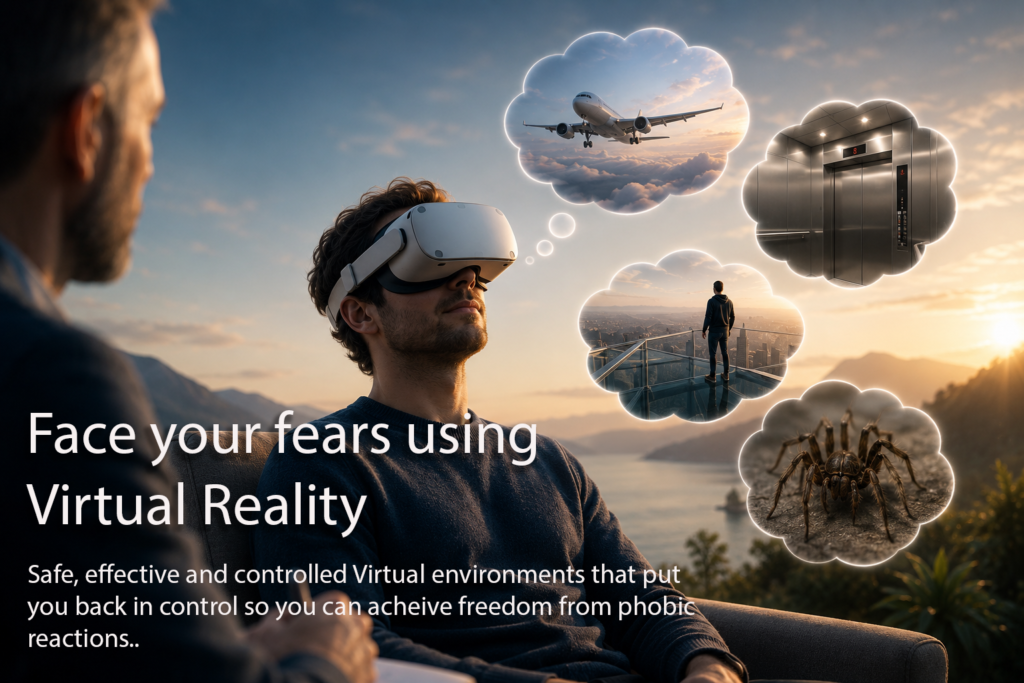
I offer VR Therapy for phobias and anxiety from my therapy practice here in Warrington, Cheshire. I use a myriad of techniques to help you overcome your problems. Virtual Reality can provide a safe, controlled way to gradually experience feared situations, helping you build confidence in how you react to them.
Many of the issues I see are classified as phobic responses; this means that the person reacts with anxiety or fear when they face the situation they fear.
I have found using Virtual Reality extremely effective as one of the treatments I offer for phobias! I have the Quest 3 headset and use a portal designed to build a hierarchy of feared situations for each client.
Virtual Reality therapy offers a safe, controlled and gradual way to work with fears, phobias and anxiety responses.
Using a VR headset, we can gently recreate certain situations that may feel difficult in real life, allowing you to practise staying calm, building confidence and learning that you can approach any feared situation safely.
How VR Therapy Can Help
VR can be useful for a range of fears and anxieties, including:
- Fear of flying
- Fear of heights
- Fear of lifts or enclosed spaces
- Fear of driving or motorways
- Fear of public transport
- Fear of spiders or insects
- Social anxiety situations
- Medical or health-related fears
- Fear of crowds or busy places
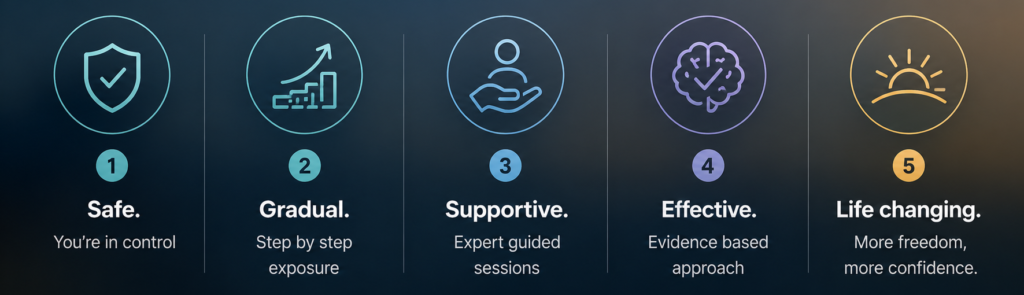
The aim is not to overwhelm you. The work is always paced carefully, and you remain in control throughout.
A Gentle Exposure Approach
Many phobias are maintained by avoidance. Avoidance can bring short-term relief, but it often keeps the fear alive.
VR therapy allows us to use graded exposure, meaning we start with something manageable and slowly build up from there. For example, someone with a fear of flying may begin by simply imagining the airport, then progress to sitting in a virtual airport, boarding a plane, hearing aircraft sounds, and eventually experiencing take-off in VR.
Each step is discussed and agreed together.
You Stay in Control
During a VR session, you are not “thrown in at the deep end.” You can pause, remove the headset or slow things down at any time.
Alongside the VR experience, we can use therapeutic techniques such as:
- Calm breathing
- Grounding techniques
- CBT-based thought work
- EMDR-informed resourcing
- Hypnotherapy
- Mindfulness and acceptance-based approaches
- Confidence-building and future rehearsal
The goal is to help your brain and body learn a new response.
Why Use VR?
VR gives the nervous system a realistic experience while still knowing you are safe in the therapy room. This can make it easier to practise facing fears before doing so in real life.
It can also be more practical than trying to arrange real-world exposure straight away. For example, we cannot easily visit an airport, board a plane or stand at a height during a therapy session — but VR can help create a useful stepping stone.
What Happens in a Session?
We begin by talking through the fear, what triggers it, and how it affects you. We then create a gradual plan that feels achievable. Basically, a hierarchy is formed; this is a list of feared situations ranging from the least fearful to the most feared. Your fears can gently be desensitised over time until your unconscious mind no longer reacts in the same way.
A VR session may include:
- Preparing with calming and grounding techniques
- Entering a mild virtual scenario
- Practising staying present and regulated.
- Noticing thoughts, feelings and body sensations
- Repeating the experience until your confidence grows
- Planning real-world steps when appropriate
The process is collaborative, supportive and adapted to your pace.
Is VR Therapy Suitable for Everyone?
VR therapy can be very helpful for many people, but it may not be suitable for everyone. Some people experience motion sickness, dizziness or discomfort when using a headset. We will always discuss this beforehand and stop if needed.
VR is used as part of therapy, not as a standalone gimmick. It works best when combined with good therapeutic preparation, emotional regulation skills and a clear treatment plan.
Taking the First Step
If a phobia or anxiety has been limiting your life, VR therapy may offer a safe and practical way to begin changing your response.
You do not need to feel completely ready. We start gently, at your pace, and build confidence one step at a time.
Please get in touch if you would like to discuss whether VR therapy could help you. Call me on 01925 354 820.